
Bench Press
Chest
OverloadedRecoveringReadyPeakPast peak
Peak opens 92 h Peak closes 128 h
How Skulpo turns logged sets into recovery states: muscle mapping, the recovery model, training timing, age and sex, and the research behind it.
Weight and reps on steppers, previous values pre-filled. Copy your previous workout in one tap.
690 exercises with primary and secondary muscle roles. Your own exercises get the same mapping.
Each muscle carries a fatigue estimate that decays over time, scaled to the age in your profile. Cardio counts too — cycling, swimming, rowing, hiking.
The body map, a per-muscle timeline and the state's explanation. It's an estimate from your log — not a measurement of your body.
The difference
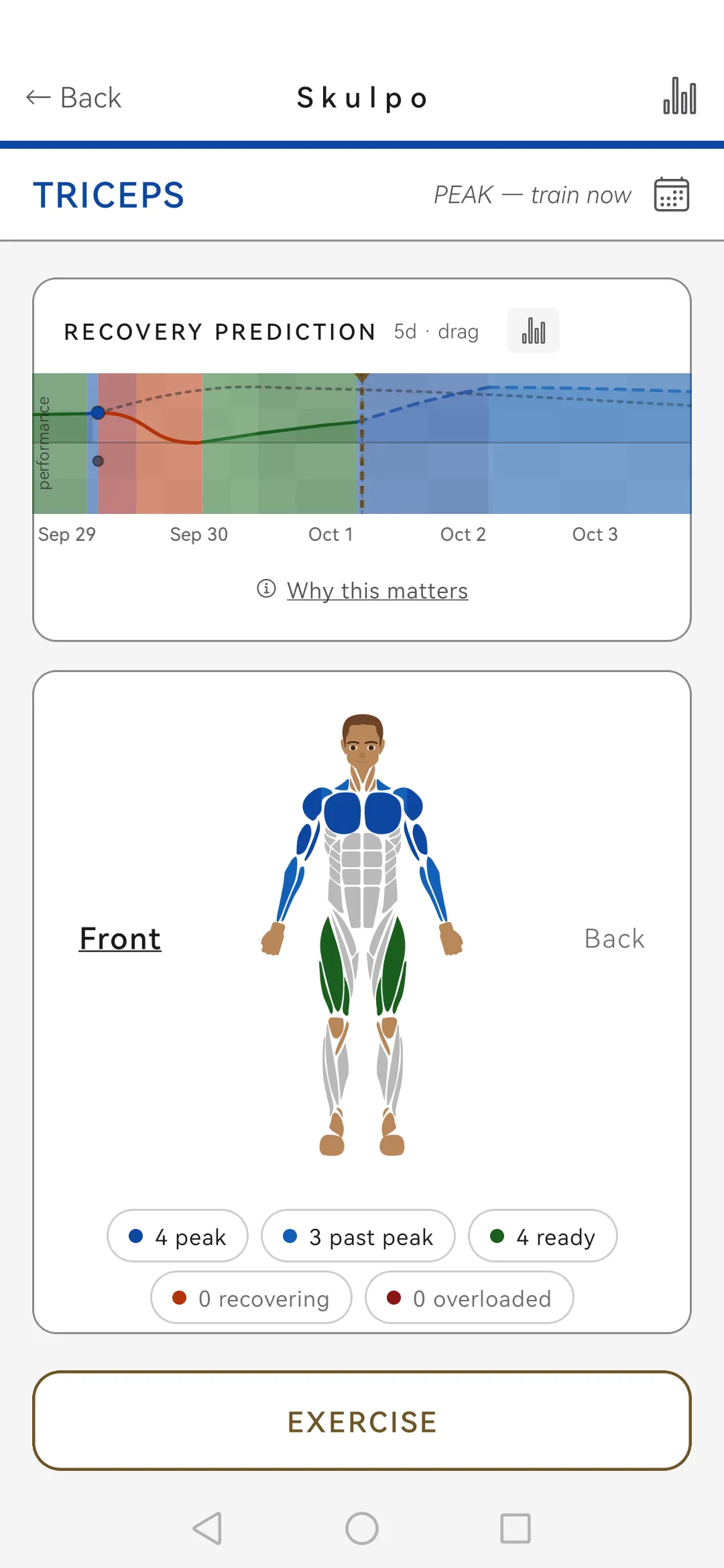
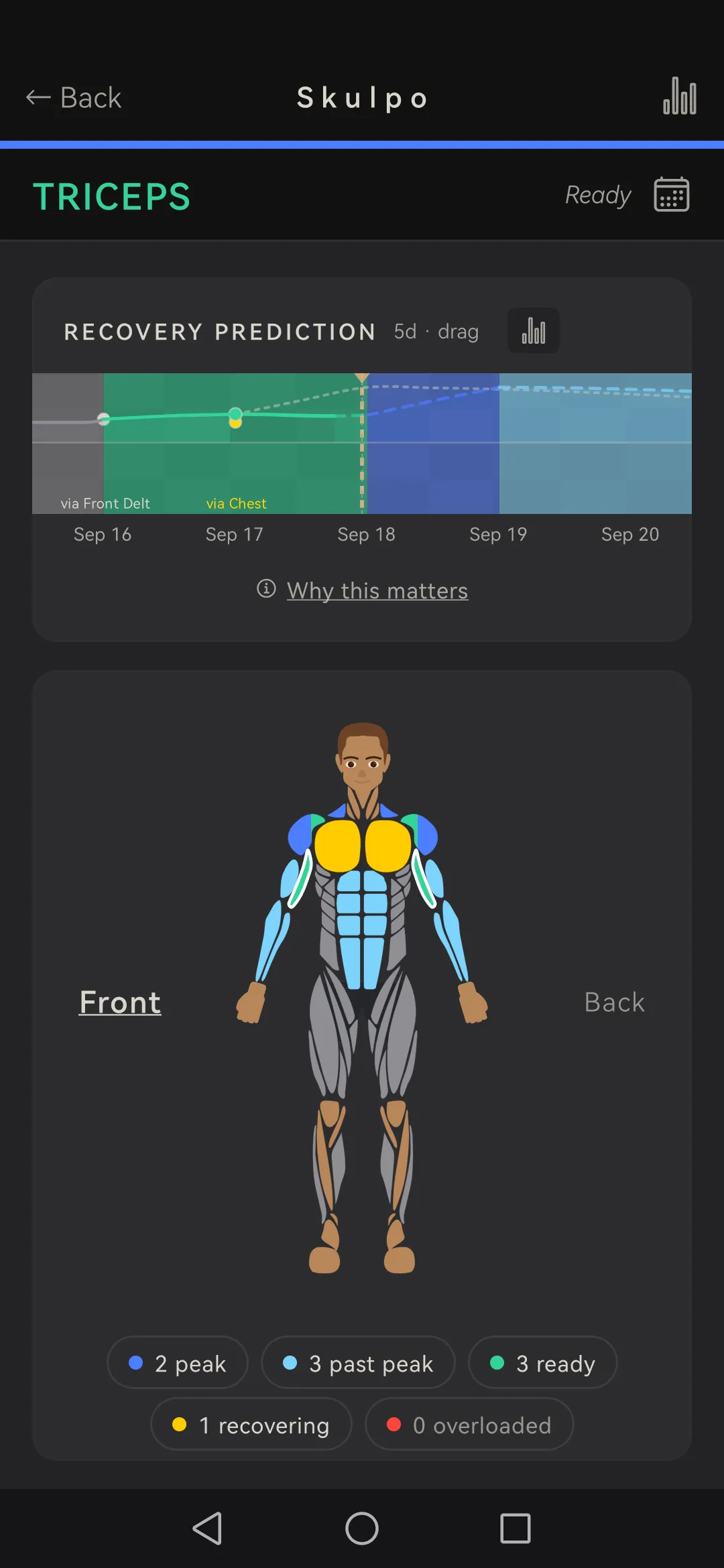
Every set you log is mapped to the muscles it trains. Skulpo runs that history through a recovery model and shows the result on a body map: each muscle in one of seven states, from Overloaded to Peak. The state is a label, not just a colour — and you can tap any muscle to see why.
Readiness
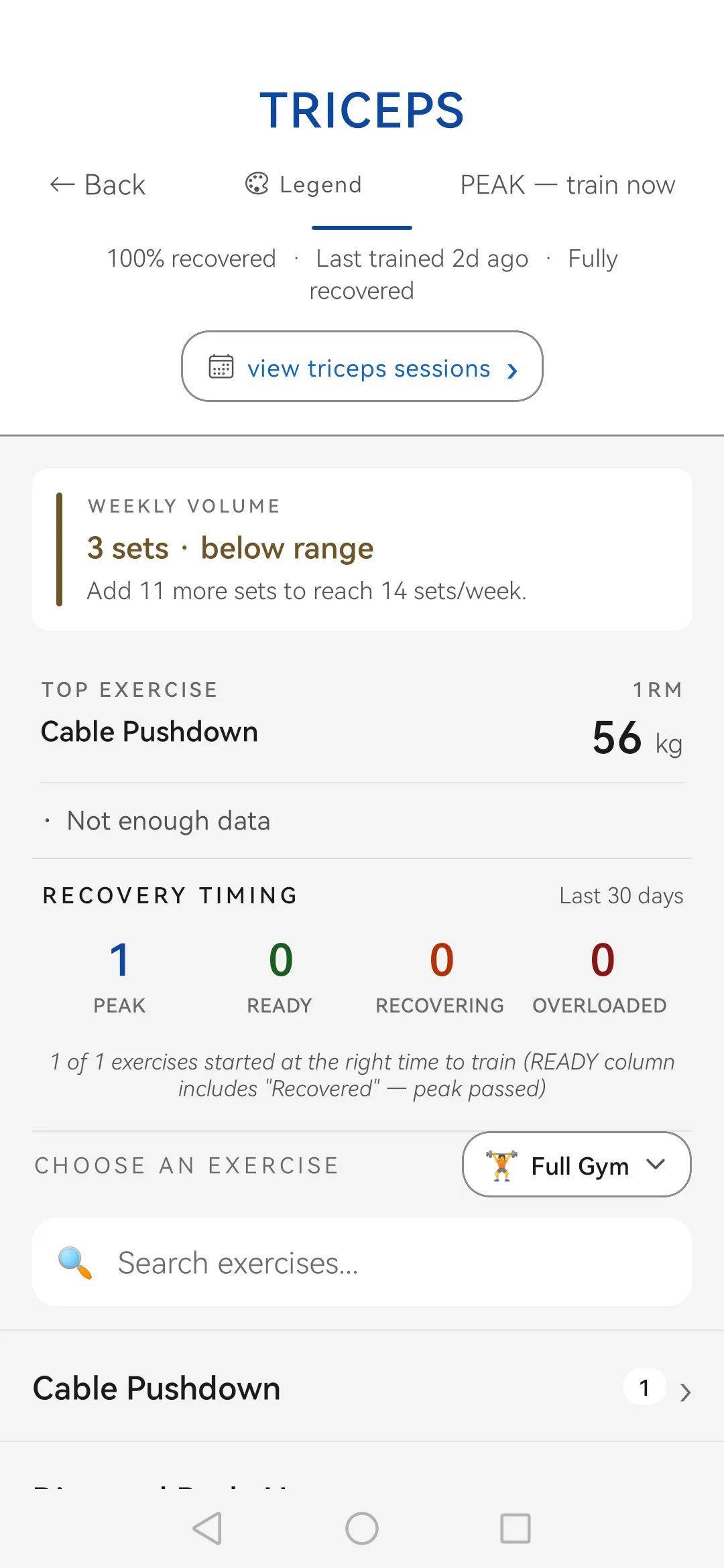
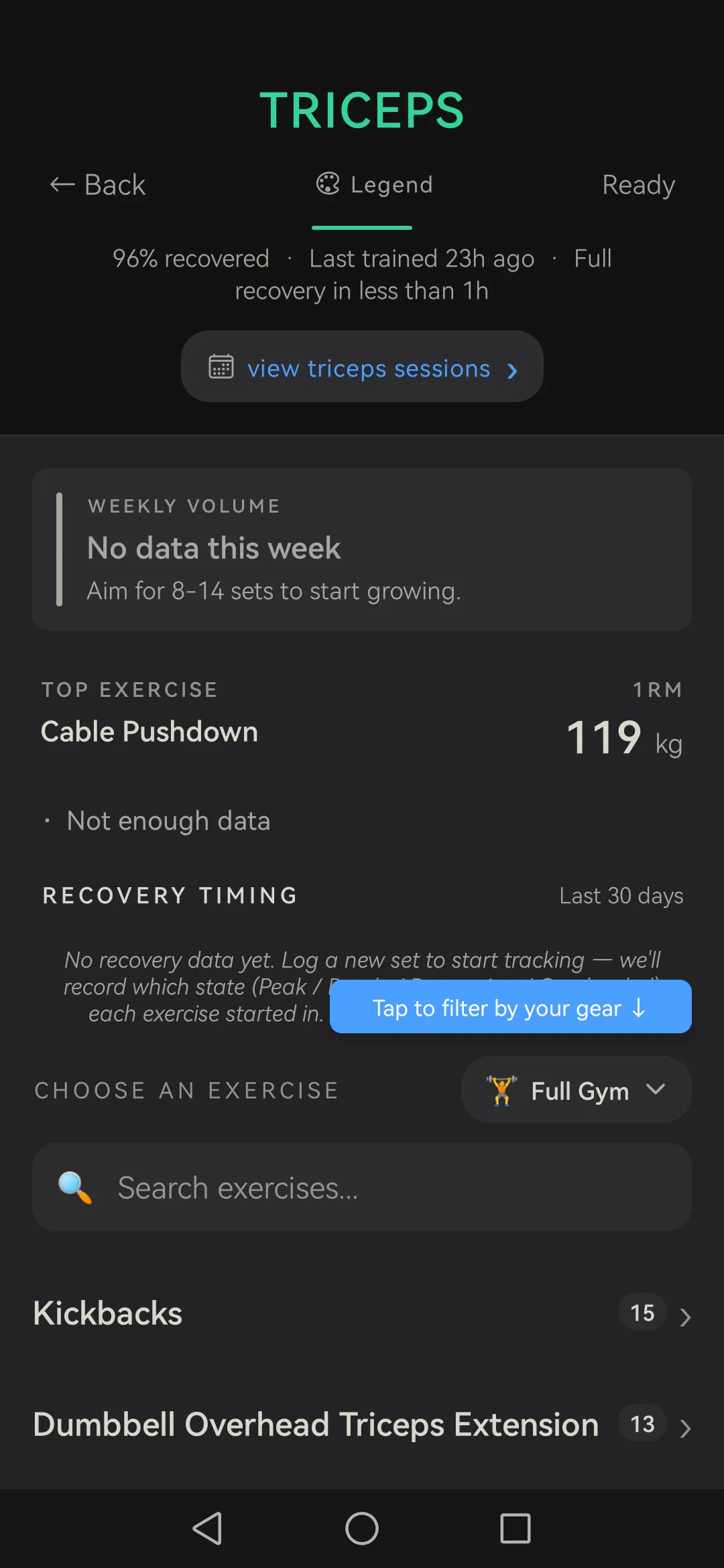
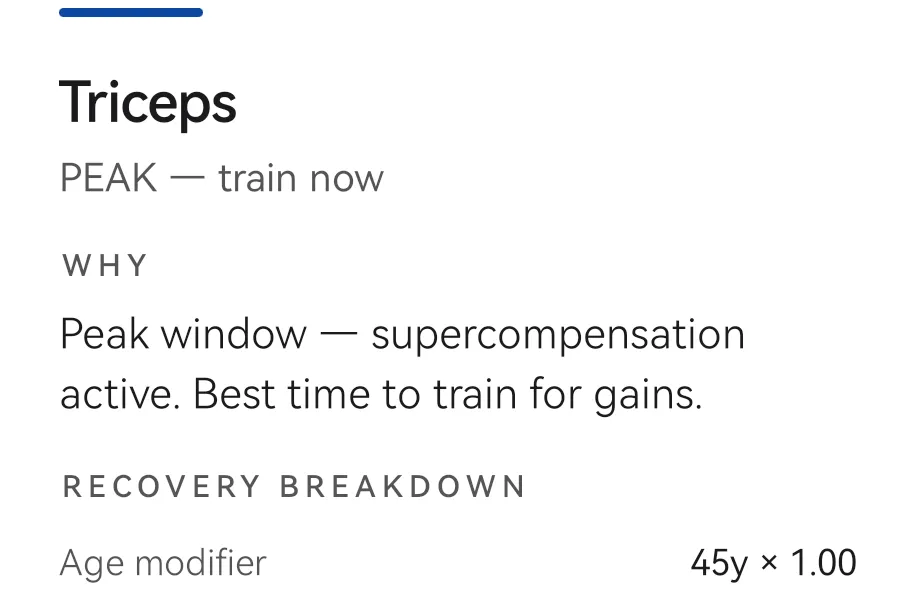
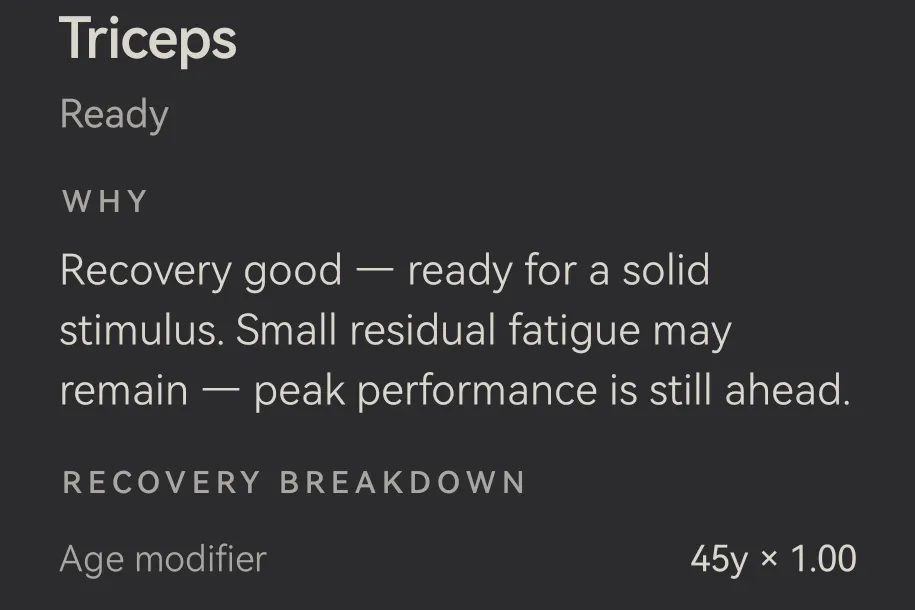
Each muscle has its own screen: the current state, a timeline of its recovery curve with the Ready line and the Peak state, and a “Why” breakdown — the age modifier from your profile and what hit this muscle in the last 7 days.
The science
Every workout damages muscle fibers. Performance drops below baseline (the DIP).
In the days after training, your body repairs and can strengthen the muscle above its previous level. This is SUPERCOMPENSATION — performance rising above where it started.
Train while the muscle is still Overloaded or Recovering = no supercompensation. The dip stacks deeper with each session and performance slides instead of rising. This is OVERTRAINING.
Skulpo estimates your Peak from your training history — when the curve turns blue, it's the best time to train.
One hard session — four sets close to failure — logged for a 25-29-year-old man with no other training. Times come from Skulpo's own recovery model; your profile and your history will move them.
Peak opens 92 h Peak closes 128 h
Peak opens 132 h Peak closes 180 h
Peak opens 66 h Peak closes 90 h
Peak opens 105 h Peak closes 153 h
Peak opens 118 h Peak closes 166 h
Peak opens 144 h Peak closes 192 h
These are baseline values for a 25–29-year-old male trainee. The app scales the window to your age and sex — experience changes how hard a session hits you, not how long the peak lasts. Older trainees get longer peak windows, younger ones shorter.
The direction of these effects — a dip, a rebound, and a cost to training too soon — is well supported in the literature. Exact timings are not: Skulpo's windows are an evidence-informed design choice, not a measured biological constant. Sources: Literature.
Computed with the app's recovery engine.
Skulpo scales each muscle's recovery — and how long its Peak lasts — to the age and sex in your profile. The “Why” screen shows the modifiers applied to you. They are model estimates informed by published research — see Literature — not a measurement of your body and not a diagnosis.
The full list of studies used in the recovery model, grouped by topic.